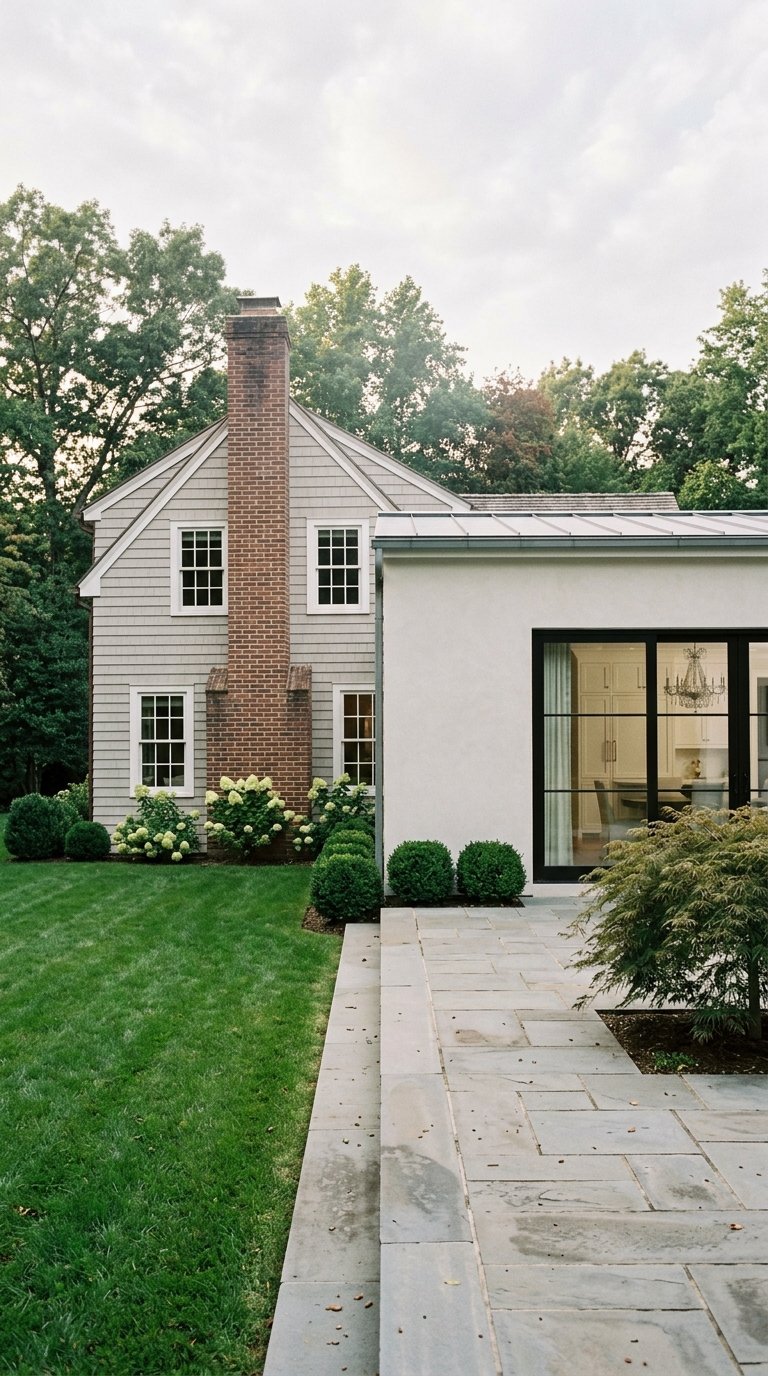
If you are deciding between a brand-new home and an older property with personality in Upper Saddle River, you are not choosing between luxury and compromise. In this market, both paths can lead to a high-value purchase on substantial land, but the day-to-day ownership experience can feel very different. The right fit comes down to how you want to live, what level of work you want after closing, and which features matter most to you. Let’s dive in.
Upper Saddle River Sets a Different Stage
Upper Saddle River is not a typical compact suburban market. Local zoning helps explain why.
In the borough’s R-1 district, minimum lot size is 37,500 square feet, with 150 feet of frontage and depth, and maximum building coverage of 15%. In the R-2 district, minimum lot size is 10,000 square feet, with 100 feet of frontage and building coverage that generally ranges from 20% on smaller lots to 15% on lots of 20,000 square feet or more.
What that means for you is simple: whether you are looking at new construction or an established home, you will often find estate-style parcels rather than tightly packed lots. That lot-driven setting is one of the defining features of Upper Saddle River.
The market is also selective. A March 2026 snapshot showed a median sale price of $2,087,500, median days on market of 61, and a 103.4% sale-to-list ratio. Buyers here are paying close attention to condition, finishes, and how much immediate work a property may require.
What New Construction Usually Offers
If your goal is a turnkey lifestyle, new construction in Upper Saddle River can be very appealing. Recent examples show that these homes are still being built on generous parcels, often around 0.88 to 1.34 acres.
That matters because a new build here does not usually mean sacrificing land for modern finishes. You can often get both: a substantial homesite and a current floor plan designed for how people live today.
Modern Layouts for Daily Life
Recent new-construction examples in Upper Saddle River tend to share certain features. You will often see two-story foyers, open kitchens with oversized islands, walk-in or butler pantries, formal living and dining rooms, first-floor guest suites or offices, mudrooms, and flexible entertaining space.
Outdoor living also plays a big role. Covered patios, pools, outdoor kitchens, and three-car garages show up often, and some homes include details like EV chargers. For many buyers, this creates a clean, organized, move-in-ready experience from day one.
Fewer Immediate Projects
One of the biggest advantages of new construction is predictability. New Jersey’s residential energy subcode uses the 2021 IECC, and certified new homes are generally positioned to offer stronger energy savings, comfort, durability, and utility-bill efficiency than older housing stock.
That does not mean every new home is identical, but it does mean the systems, insulation, and construction standards are usually a major part of the appeal. If you want lower near-term maintenance and fewer unknowns, this can be a strong reason to lean toward new construction.
Best Fit for the Buyer Who Wants Ease
New construction often works best if you want a function-first home that supports a busy routine. If you are upsizing, relocating, or simply want more bedrooms, more storage, and less renovation stress, a newer property may suit you well.
In a high-price market like Upper Saddle River, paying more upfront for a finished product can feel worthwhile if it saves time, decision fatigue, and a long post-closing to-do list.
What Character Homes Usually Offer
A character home in Upper Saddle River can mean several things. It may be a true antique farmhouse, a historic stone home, or an older colonial or mid-century property with a more established feel.
The borough has a real historic layer. Bergen County identifies the Hopper-Goetschius House Museum, dating to 1739, as the oldest remaining house in the borough, and the Upper Saddle River Historical Society documents a range of historic homes in town. So when you hear “character home” here, it can reflect genuine architectural history.
Original Details and Mature Setting
Older homes often appeal because they feel less standardized. A strong local example is an 1800-built antique colonial farmhouse on 0.86 acres that featured a wraparound porch, fieldstone fireplaces, and a center-hall layout, while also showing that older homes can be partly modernized without losing their identity.
Other established homes in town include mid-century properties from the 1950s and 1960s. That range matters because “older” does not always mean historic. It may simply mean a home with mature landscaping, a settled setting, and a layout or architectural style that feels distinct from current new-build trends.
More Variation From House to House
This is where character homes become both exciting and more complex. Two older homes in the same area can offer very different ownership experiences depending on renovation history, systems updates, floor plan, and overall condition.
One home may have preserved details and updated essentials. Another may need a larger investment to bring it in line with your expectations. That variation is part of the appeal, but it also means your evaluation needs to be specific and practical.
Best Fit for the Buyer Who Values Individuality
A character home often makes sense if you care more about originality, setting, and architectural detail than perfect uniformity. You may also prefer the idea of improving a home over time rather than paying for every upgrade upfront.
In Upper Saddle River, that can be a luxury choice in its own right. A home with history, land, and a strong sense of place can offer something a brand-new property may not fully replicate.
Maintenance and Efficiency Matter
Lifestyle preferences are important, but so are ownership costs in the first few years. This is one of the clearest areas where new construction and older homes often diverge.
Census Bureau research shows that owners of older homes who moved in within the previous two years spent a median of $3,900 per year on upkeep, compared with $1,500 for longtime owners. Median annual maintenance alone was about $540. The key takeaway is not that older homes are always expensive to own, but that early costs can be front-loaded.
New Homes Offer More Predictability
With a new home, you are usually starting with newer systems and materials. That often translates into fewer immediate repairs and a more predictable maintenance schedule in the near term.
For buyers balancing a move, career demands, or a larger household, that predictability can be very valuable. It may also make budgeting feel simpler in the first years of ownership.
Older Homes Need a Clear Plan
An older home can still be an excellent purchase, but it helps to go in with eyes open. You may want to think about what has already been updated, what may need attention soon, and how much flexibility you want in your post-closing budget.
Some buyers are happy to accept that tradeoff because they love the home’s setting or architecture. Others would rather avoid the possibility of early projects, even if they admire the charm.
Resale in Upper Saddle River Is Condition-Sensitive
In this market, age alone does not determine value. Condition, lot quality, finish level, and renovation burden all play a major role.
That is clear in recent numbers. While the borough’s March 2026 market snapshot showed a median sale price of $2,087,500, recent new-construction sales ranged from about $1.9 million to $4.0 million. By contrast, an 1800-built farmhouse sold as-is for $605,000 in 2023.
Presentation and Updates Carry Weight
For you as a buyer, this means resale planning should start now, not later. A well-finished home with broad appeal may attract strong attention when it is time to sell. An older property with deferred work may be judged more heavily on the scope of updates a future buyer expects to take on.
That does not make character homes a weaker choice. It simply means the path to future value may depend more on the quality of renovations, preservation of appealing details, and how thoughtfully the home is maintained.
How to Decide Which Home Fits You
If you are torn between new construction and a character home, start with your daily life rather than the listing photos. The better question is not which category is better. It is which type of ownership experience fits you best.
Choose New Construction If You Want:
- A move-in-ready home with a modern floor plan
- More predictable systems and energy efficiency
- Fewer immediate maintenance projects
- Open entertaining spaces, large kitchens, and flexible rooms
- A turnkey transition with less post-closing work
Choose a Character Home If You Want:
- Architectural detail and a less standardized feel
- Mature landscaping and an established setting
- The possibility of preserving or improving original features
- More individuality from one property to the next
- A home that may evolve with your vision over time
Why Local Insight Matters in This Choice
In Upper Saddle River, lot size, zoning, condition, and improvement potential all matter. On paper, two homes may seem similar in price or acreage, but the ownership experience can be very different once you look at layout, updates, and long-term fit.
That is why local guidance is especially valuable in this market. Understanding how a property sits on the land, how it compares with nearby inventory, and how buyers in this area respond to condition and finish level can make your decision much clearer.
Whether you are drawn to a newly built residence or a home with history and presence, the smartest move is to compare the full picture, not just the style. If you want tailored guidance on Upper Saddle River homes, Sheryl Epstein-Romano offers discreet, high-touch counsel grounded in deep local market and zoning knowledge.
FAQs
What is the main difference between new construction and character homes in Upper Saddle River?
- New construction usually offers modern layouts, newer systems, and fewer immediate projects, while character homes often offer architectural detail, mature settings, and more variation in layout and condition.
Are new construction homes in Upper Saddle River built on small lots?
- No. Recent examples show new homes in Upper Saddle River are often built on substantial parcels, roughly around 0.88 to 1.34 acres, which fits the borough’s large-lot pattern.
Do older homes in Upper Saddle River always need renovation?
- No. Some older homes have already been partly modernized, while others may need more work. Condition can vary widely from one property to the next.
Is resale value in Upper Saddle River based more on age or condition?
- Condition plays a major role. Recent local market data suggests buyers are strongly influenced by finish level, renovation burden, lot quality, and overall presentation.
Which type of home is better for a buyer who wants fewer maintenance surprises in Upper Saddle River?
- New construction is usually the better fit if you want newer systems, stronger energy efficiency, and fewer near-term maintenance concerns.
Which type of home is better for a buyer who wants originality in Upper Saddle River?
- A character or established home is often the better fit if you value architectural detail, mature landscaping, and a home that feels less standardized.