
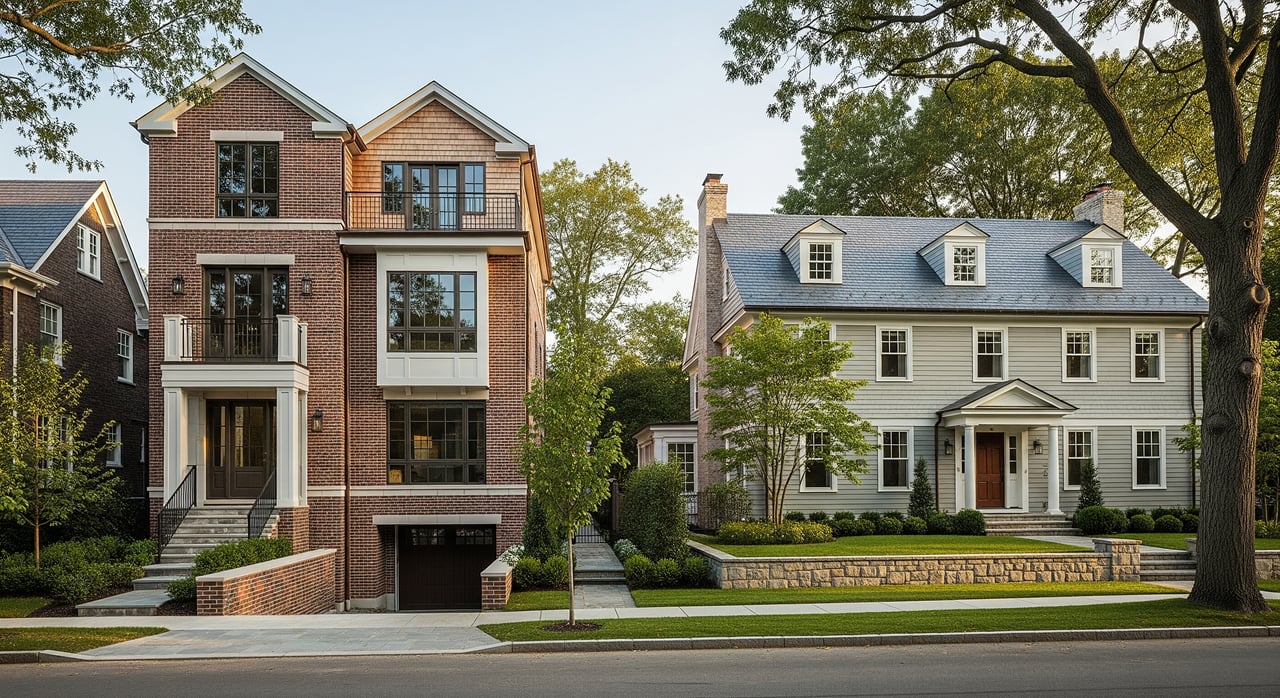
Thinking about a townhome or a single-family home in Allendale and wondering which one truly costs less to own each month? You’re not alone. On paper, a townhome might list for less, while a single-family home can feel more expensive because of property taxes and maintenance. In this guide, you’ll learn how to compare all the moving parts, from taxes and HOA fees to insurance, utilities, and long-term upkeep, plus the lifestyle tradeoffs that matter in Allendale. Let’s dive in.
What drives total cost
When you compare Allendale townhomes and single-family homes, look beyond the list price. Your total cost of ownership includes:
- Purchase price and property taxes
- HOA or COA fees for townhomes
- Homeowners insurance
- Utilities and operating costs
- Routine maintenance and capital replacements
- Potential special assessments in associations
Purchase price and property taxes
In Allendale, detached homes with larger lots and private amenities typically command higher prices than attached townhomes of similar interior size. Property taxes in New Jersey are among the highest in the country, and Bergen County is above the national average. Because single-family homes often have higher assessed values, their tax bills are usually higher in absolute dollars.
To estimate taxes on a property you’re considering, request the current tax bill or the assessed value and local rate. A simple approach is to use the latest tax bill if available. If not, multiply the assessed value by the combined municipal, county, school, and any special district rates to estimate the annual amount.
HOA fees vs no HOA
Most townhomes in suburban New Jersey are part of an association. Monthly or quarterly dues can cover common-area maintenance, exterior repairs, landscaping, snow removal, trash, reserves, and sometimes utilities or amenities. Fees vary by the age of the community, what is included, and reserve funding. In many suburban settings, fees commonly range from the low hundreds per month to higher amounts where amenities are extensive.
A single-family home often has no HOA fee. You’ll handle exterior upkeep and hire vendors yourself, which shifts the time burden to you but provides more control.
Insurance differences
- Single-family: You typically carry an HO-3 homeowners policy that covers the dwelling, personal property, and liability.
- Townhome: If the community has a master policy that covers the exterior and common elements, you’ll likely carry an HO-6 policy for the interior, personal property, liability, and possibly loss assessment. In fee-simple townhome communities where the association does not insure the structure, you may need full dwelling coverage similar to an HO-3. Confirm what the master policy includes before you bind coverage.
HO-6 premiums are usually lower than full dwelling policies, but factor in deductibles and any loss assessment exposure if the association’s master policy has high deductibles or limited coverage.
Utilities and operating costs
Utility costs depend on size, efficiency, and what the HOA includes. Some townhome communities include items like water, trash, or exterior lighting in their dues. In a single-family home, you will typically pay all utilities directly. Larger homes with more exterior exposure often have higher heating and cooling costs.
Maintenance and capital projects
With a single-family home, you are responsible for the roof, siding, exterior paint, driveway, deck, and landscaping. A common rule of thumb is to budget 1 to 3 percent of the home’s value annually for maintenance and repairs, with more set aside for older homes. Townhomes often shift exterior maintenance to the association, reducing your day-to-day workload but adding an ongoing fee and potential assessment risk if reserves are not adequate.
Snow removal and landscaping are often included in townhome dues. As a single-family owner, you will hire services or manage the work yourself.
Special assessments risk
Associations can levy special assessments for major projects like roof replacements or unexpected structural repairs. Before you buy a townhome, review the reserve study, current reserve balances, operating budget, recent audits or financial statements, and meeting minutes. Look for any history of assessments, planned capital projects, and delinquency rates that could indicate financial stress.
Privacy, outdoor space, and lifestyle
Single-family homes typically offer more privacy, no shared walls, and larger yards for outdoor living. You also have more flexibility to add or modify exterior features, subject to municipal zoning and permitting. Townhomes share walls and common areas, which can mean less private outdoor space and architectural rules that limit exterior changes. In return, you gain a lower-maintenance lifestyle that many busy professionals and downsizers prefer.
Financing and resale considerations
Buyer pool and resale
Single-family homes tend to attract a wide buyer base, which can support stable demand in a suburban community like Allendale. Townhomes often appeal to first-time buyers, professionals seeking low-maintenance living, and downsizers. Appreciation depends on local supply and demand, commute convenience, and inventory for each property type.
Financing checks for attached homes
Some lenders require condo or townhome projects to meet specific criteria related to reserves, owner-occupancy, and litigation. Documentation requirements can be stricter for certain projects. Appraisals for attached housing can be more complex when there are few comparable sales.
Rental rules and investor demand
HOAs may have rental caps, minimum lease terms, or other restrictions. These rules affect resale to investors and your flexibility if you plan to rent your home in the future. Single-family homes are often less restricted, subject to municipal codes.
A hypothetical monthly comparison
The example below is for illustration only to show how costs can compare when you add everything together. Actual numbers will vary by property, assessed value, HOA coverage, and insurance.
- Townhome example: Purchase price $600,000; HOA $400/month; owner HO-6 insurance $35/month. Using a 2.2 percent sample tax rate, annual taxes are about $13,200, or $1,100/month. Total of taxes + HOA + insurance is about $1,535/month, not including mortgage or utilities.
- Single-family example: Purchase price $800,000; no HOA; owner HO-3 insurance $150/month. Using the same sample tax rate, annual taxes are about $17,600, or $1,467/month. Total of taxes + insurance is about $1,617/month, not including mortgage or utilities.
This hypothetical shows why a single-family home’s monthly carrying costs can be close to a townhome’s once you include HOA dues. Your outcome in Allendale will depend on actual pricing, the property’s assessed value and tax bill, insurance, and what the HOA covers.
What to verify in Allendale
For any townhome
- HOA and COA documents: CC&Rs, bylaws, declaration, and rules
- Financials: latest operating budget, reserve study, recent audit or financials, current reserve balances, delinquency rate
- HOA meeting minutes for the past 12 to 24 months
- Master insurance policy declarations, including limits and deductibles
- Special assessments: history, any pending or planned capital projects
- Rental and pet rules
- Maintenance map: what the HOA covers vs what you cover
- Unit boundaries: exclusive-use areas vs common elements
For any single-family home
- Recent property tax bill and current assessed value
- Utility history for the past 12 months
- Condition and ages: roof, HVAC, windows, electrical, and septic if applicable
- Zoning, easements, and lot coverage rules for future projects
- Records of recent major repairs, renovations, and permits
For financing and resale
- Ask your lender about condo or townhome project eligibility and documentation
- Request comparable sales from the last 6 to 12 months for both attached and detached homes
- Discuss buyer demand trends in Allendale by property type
How to pick the right fit
If you want maximum privacy, larger outdoor areas, and control over exterior improvements, a single-family home may be worth the added maintenance and higher taxes. If you prefer a lock-and-leave lifestyle with less yard work and more predictable exterior upkeep, a townhome can simplify your routine even if you pay monthly dues. In Allendale, where many buyers balance commuting needs with neighborhood life, the best choice aligns your budget with how you want to live.
If you would like help comparing specific properties, including tax bills, HOA health, zoning considerations, and long-term maintenance planning, connect with Sheryl Epstein-Romano to request a confidential consultation.
FAQs
What ownership costs are unique to Allendale townhomes?
- You will likely have monthly HOA or COA dues, a master insurance policy that affects your personal HO-6 coverage, and potential special assessments tied to the association’s reserves and capital projects.
How do property taxes compare between Allendale townhomes and single-family homes?
- Single-family homes often have higher assessed values, so their total tax bills are usually higher, but you should always confirm the most recent tax bill for the exact parcel you are considering.
What insurance do I need for an Allendale townhome?
- If the HOA’s master policy covers the exterior, you typically carry an HO-6 policy for the interior, personal property, liability, and loss assessment; confirm coverage details in the HOA documents.
Can HOA fees replace my maintenance budget?
- Dues often cover exterior and common-area upkeep, but you should still budget for interior repairs and the risk of special assessments if reserves are inadequate.
Is financing harder for Allendale condos or townhomes?
- It can be if the project does not meet lender criteria on reserves, occupancy, or litigation, so have your lender review the project early in the process.
How should I build a monthly budget before making an offer?
- Add taxes, HOA dues if any, insurance, a realistic utility estimate, and a maintenance reserve, then compare that total across properties along with your projected mortgage payment.