
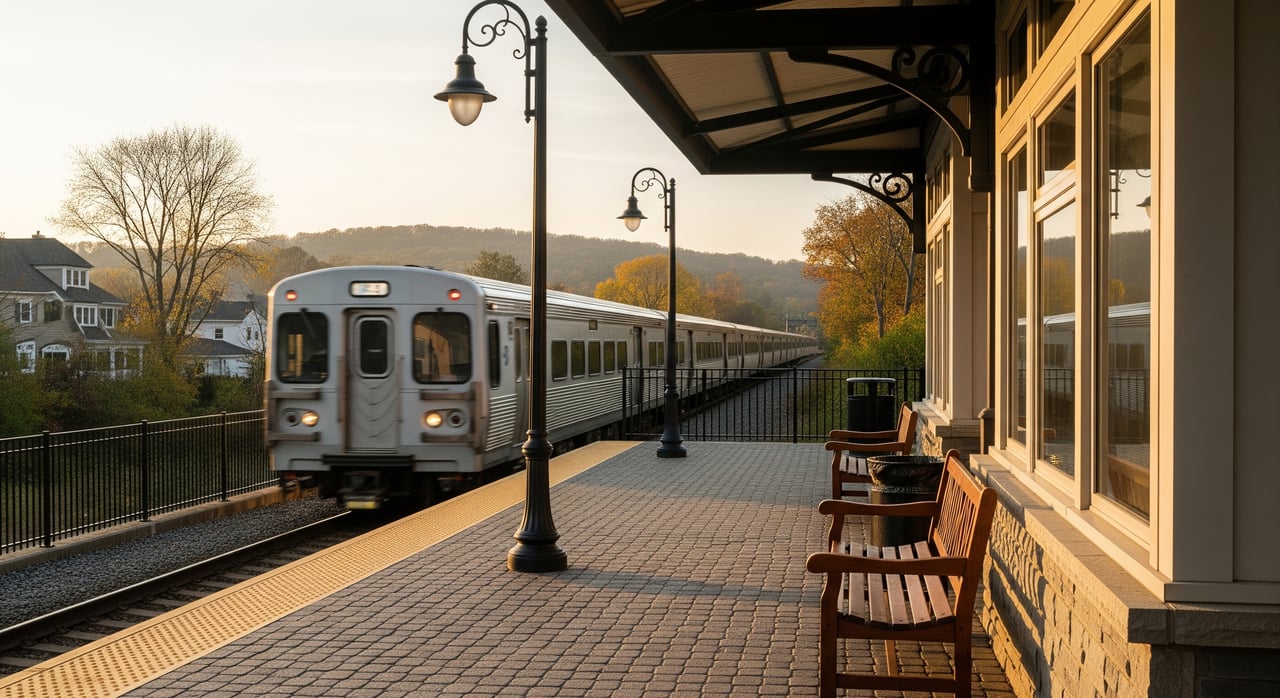
Thinking about Mahwah for your New York City commute? You are not alone. Many relocating professionals choose Mahwah for its space, greenery, and direct access to regional transit. The challenge is picking the route that fits your schedule and lifestyle. In this guide, you will learn how to commute from Mahwah by train, express bus, and car, plus how parking and peak patterns shape your day. Let’s dive in.
Your rail options from Mahwah
Where the trains go
Mahwah is served by NJ Transit’s Main–Bergen County rail corridor. Most riders travel toward Hoboken, or transfer at Secaucus Junction for service to New York Penn Station. If your office is near Midtown’s Penn Station, the Secaucus connection is usually the most direct path.
Transfers you should expect
From Mahwah, you typically transfer at Secaucus Junction to reach New York Penn Station. You can also stay on to Hoboken Terminal for PATH or ferry connections to Manhattan. Use the NJ Transit trip planner to compare the timing of both paths and see your best option by time of day. You can check current schedules on the NJ Transit site under the rail planner and timetables at the Schedules page. For up-to-the-minute changes, see NJ Transit’s service advisories page.
- Explore timetables and plan trips on the NJ Transit Schedules page: NJ Transit schedules and trip planner
- Check service updates before you leave: NJ Transit service advisories
Typical travel time ranges
Exact times vary by departure, transfer, and crowding. During peak hours, door-to-door timing is often the most predictable by rail because trains bypass bridge and tunnel traffic. Off-peak rides can be similar or a bit faster if your transfer lines up well. Build in extra time when you must change trains at Secaucus, and when weather or track work is in play.
Fares and passes
NJ Transit organizes fares by zones, with choices like one-way, 10-trip, and monthly passes. If you ride most weekdays, a monthly pass can be economical and includes transfers within the system where applicable. Review the latest pricing in the fare tables when you plan. You can do this directly from the Schedules page above.
Station access and amenities
Before you decide on a neighborhood, look at how you will reach the station: walking, drop-off, or parking. Confirm current details on ADA access, bike racks, and real-time boards on NJ Transit’s Stations and Parking page, then search for Mahwah to see station-specific information.
- Station details and parking: NJ Transit Stations and Parking
Express buses to Midtown
Operators and Manhattan terminals
Express buses serve the Mahwah area and nearby towns with routes into Manhattan. Coach USA/ShortLine is a primary regional operator and connects to the Port Authority Bus Terminal in Midtown. Check the latest Mahwah and neighboring stop locations and timetables directly with the operator.
- Schedules and stops: Coach USA/ShortLine
- Midtown terminal information: Port Authority Bus Terminal
When buses are fastest
Buses can be a great choice when your stop and schedule line up with your office hours. Early departures and late evening rides can be very efficient. During the heart of rush hour, bus times vary because they share bridge and tunnel traffic with cars.
Fares and commuter benefits
Most bus operators offer single-ride tickets and monthly passes, and many accept employer commuter benefit programs. If you ride irregularly, pay-as-you-go can be easier than a pass. If you commute most weekdays, run the math on a monthly pass.
Seat availability and timing
Peak buses can fill quickly. If you prefer a guaranteed seat, look for early departures or routes that allow reservations if offered. As a backup, compare a rail trip that leaves within the same 15 to 30 minute window.
Park-and-ride and station parking
Where commuters park
Commuters typically use station lots, municipal lots near key stops, or designated park-and-ride facilities in nearby towns. Some lots are permit only, others combine permits with daily first-come spaces. Rules and availability change with demand.
Permits vs. daily rules
Many lots sell monthly or seasonal permits, which can be crucial if you drive to the train most days. A daily option can work if you are hybrid and commute a few times a week. Review the station’s page on NJ Transit and confirm the local municipal rules for lot access and any resident-only hours.
- Station parking details: NJ Transit Stations and Parking
What to verify before you move
- Permit availability, pricing, and waitlist details.
- Daily rates, payment method, and typical fill times.
- Resident-only restrictions and overnight rules.
- Who manages the lot and how to apply.
If your preferred lot has a waitlist, a nearby park-and-ride or a bus stop in the next town can be a practical short-term solution.
Driving to Manhattan
Primary routes from Mahwah
Most Mahwah drivers use Route 17 and I-287 to reach major crossings. The George Washington Bridge corridor is the most common gateway to Manhattan. Depending on your destination, some drivers choose Lincoln or Holland Tunnels via Route 4, Route 3, or I-80.
Bridge and tunnel choices
- George Washington Bridge for Midtown West and Upper Manhattan.
- Lincoln Tunnel for Midtown West and the 30s to 40s streets zone.
- Holland Tunnel for Lower Manhattan and Hudson Square areas.
Tolls and cost planning
Tolls change periodically and vary by time of day and E-ZPass status. Review current rates on the Port Authority site, and consider the cost of parking in Manhattan if you drive all the way in.
- Current tolls and E-ZPass policies: Port Authority toll information
How long it takes and why it varies
Driving offers door-to-door flexibility but the widest range of outcomes. Weather, crashes, lane closures, and the morning surge into bridge and tunnel plazas have an outsized impact. Leave buffer time for meetings that cannot slip, and consider a rail or bus backup on high-risk days.
Smart tools for drivers
Check live traffic, incidents, and cameras before you leave. NJ 511 provides statewide road conditions and advisories you can trust.
- Road incidents and traffic cameras: NJ 511
Peak patterns and reliability
Weekday rush windows
Inbound mornings often concentrate from about 6:30 to 9:30 a.m. Outbound evenings are typically busiest from about 4:00 to 7:00 p.m. Trains are usually the most time-predictable during these windows, while buses and cars feel the biggest slowdowns near bridge and tunnel plazas.
Weather and events
Winter storms, heavy rain, and major events can shift everything. Rail can see delays from track or overhead issues. Buses and cars are vulnerable wherever lanes compress, especially approaching the George Washington Bridge and Midtown streets.
Backups and plan B
Have a second option ready. If you are a rail rider, know the next two departures that still get you to your meeting. If you rely on a bus, keep the rail timetable handy. If you drive, know which rail station or bus stop you can divert to if the bridge backs up.
Choosing your Mahwah neighborhood
Rail-centric living
If you want a predictable schedule without driving daily, look within a comfortable walking or biking distance of the station. This can reduce your need for a parking permit and keep your morning routine simple.
Driver-friendly living
If you plan to drive most days, prioritize quick access to Route 17 or I-287 and a reliable driveway or garage setup. This is helpful for nonstandard hours or occasional late-night returns.
Hybrid and remote
If you commute a few days a week, you may value flexible parking over the absolute shortest walk. Being near groceries, fitness, and other conveniences can offset a slightly longer drive to the station or park-and-ride.
How to test your commute
- Pick your top two office arrival times and test both paths on the NJ Transit trip planner. Compare Hoboken plus PATH against Secaucus plus New York Penn Station. Start here: NJ Transit schedules and planner.
- If you are considering a bus, check Coach USA/ShortLine for stops close to your target neighborhood and review peak-only versus all-day runs: Coach USA/ShortLine.
- For driving, run two or three test trips at your likely departure times and compare alternate approaches. Check live conditions each time on NJ 511.
- Review station parking and permit requirements on NJ Transit Stations and Parking. If a lot is waitlist-only, identify a backup lot or bus stop.
- After you close, keep NJ Transit service advisories bookmarked so you can adjust quickly on weather or construction days.
Finding the right commute is about matching your routine with the strengths of each option. If you want an experienced local advisor to help you pair neighborhoods with your workweek, reach out to Sheryl Epstein-Romano for a confidential consultation.
FAQs
How long is the commute from Mahwah to Midtown by train?
- Plan on a predictable window during peak hours, with timing driven by your transfer at Secaucus Junction and the exact train pair you choose; compare trips on the NJ Transit schedules page for your target arrival.
Do I need to transfer to reach New York Penn Station from Mahwah?
- Most riders transfer at Secaucus Junction to reach New York Penn Station; you can also ride directly to Hoboken Terminal and continue by PATH or ferry depending on your Midtown or downtown destination.
Is there reliable commuter parking at Mahwah Station?
- Availability depends on permits, daily spaces, and demand; check current rules and open spots via NJ Transit Stations and Parking and confirm any local municipal restrictions before you decide.
Are express buses a good alternative to rail from Mahwah?
- Yes, especially for direct access to Port Authority Bus Terminal in Midtown and when traffic is light; review nearby stops and peak schedules with Coach USA/ShortLine and keep a train option as backup on heavy traffic days.
How predictable is the drive to the George Washington Bridge in the morning?
- It varies by departure time, incidents, and weather; use NJ 511 for live conditions and allow buffer time during the core rush period into bridge and tunnel plazas.
Which Mahwah areas fit rail commuters versus drivers?
- Rail-focused commuters often prioritize a short walk or quick drop-off to the station, while drivers look for easy access to Route 17 or I-287 and reliable on-site parking; hybrid workers balance both with flexible parking and nearby amenities.