
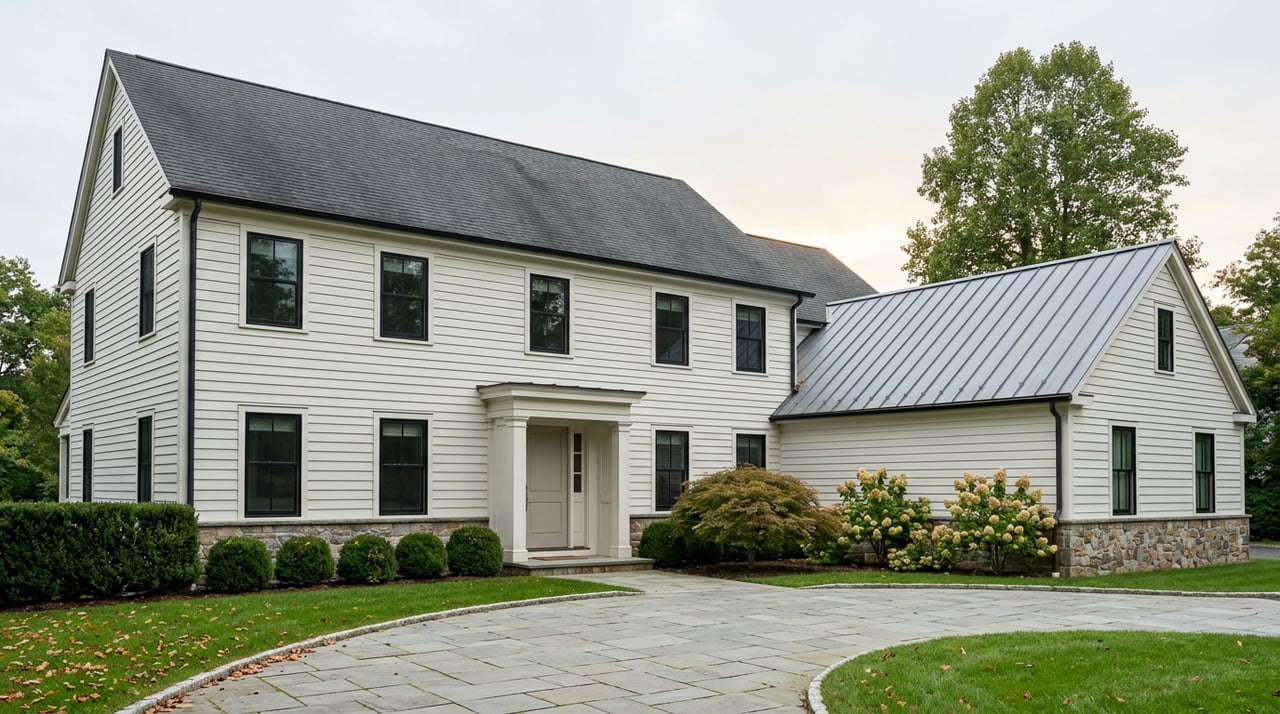
A homeowner on a wooded lot in Saddle River finishes a two-story addition in June. The final inspection passes. The Certificate of Occupancy arrives. Everyone exhales. Then October comes, and a tax bill shows up that nobody budgeted for, separate from the regular quarterly bill, with a due date that lands on the same day as the one the mortgage company already has on file.
That second bill is not a mistake. It is New Jersey's Added Assessment Law doing exactly what it was written to do, and in a town where the average residential tax bill already ranks among the highest in Bergen County, the timing of that bill deserves more attention than it usually gets.
The mechanism, in plain terms
New Jersey does not wait until the next annual reassessment cycle to tax the value a renovation adds to a home. Under N.J.S.A. 54:4-63.2 and 54:4-63.3, once a Certificate of Occupancy is issued for a completed addition, pool, or new structure, the property becomes taxable for that added value starting the first day of the following month. A home addition finished in June starts accruing added-assessment liability on July 1, even though the borough's normal valuation date for everyone else is October 1 of the prior year.
The state's own Assessors' Handbook describes this as a partial assessment problem: property that is mid-construction on the standard valuation date gets a prorated value based on how much of the project existed at that point, and the assessor calculates the added value separately once the work is done. The bill that results is not a full year of new taxes. It is a prorated slice covering the months between completion and December 31, calculated by the local assessor after a permit review or property inspection.
Here is the sequence, start to finish:
- Building permit approved and construction begins.
- Work completes and a final inspection is scheduled.
- Certificate of Occupancy is issued, which is the date the local construction office reports to the Tax Assessor.
- The assessor determines how much market value the completed work added and prorates it for the remaining months of the calendar year.
- The added assessment is filed on October 1, alongside the borough's regular assessment list.
- The bill goes out in October, with payment due November 1.
- Homeowners who disagree with the valuation have until the statutory December 1 deadline to file an appeal with the Bergen County Board of Taxation.
None of this is unique to Saddle River. It is how the law works across New Jersey. What is worth stopping on is what happens when that statewide mechanism lands in a town with Saddle River's particular billing calendar and particular tax profile.
The collision nobody mentions at the permit counter
Saddle River's Tax Collector's office lists four regular payment dates each year: February 1, May 1, August 1, and November 1. That fourth installment, due November 1, is part of the borough's ordinary quarterly cycle and covers the same average annual bill every homeowner already pays.
The added assessment triggered by a completed renovation is also due November 1.
That means a homeowner who finishes a major addition this year does not get one November tax bill. They get two, arriving separately, both due on the same date: the regular fourth-quarter installment they have paid every year, and a new added-assessment bill covering the months since their Certificate of Occupancy was issued. If a mortgage escrow account is set up to auto-pay the regular quarterly bill and nothing else, the added-assessment bill can slip past unnoticed until interest starts accruing on it, since Saddle River applies interest after a ten-day grace period under state law like every other New Jersey municipality.
For anyone financing a large renovation project, this is the detail worth flagging to a lender or mortgage servicer well before October, not after the bill arrives.
Why the size of the number matters more here than elsewhere
The most recent county-wide comparison of average residential tax bills, based on 2024 figures, placed Saddle River among the highest in Bergen County, trailing only Demarest, Tenafly, and Alpine, and running slightly ahead of Franklin Lakes. The pattern behind all five towns is the same: small populations, premium housing stock, well-regarded school systems, and almost no commercial tax base to spread the cost across. In towns built this way, nearly the entire municipal, county, and school levy falls on residential homeowners.
| Town | Average residential tax bill (2024) |
|---|---|
| Demarest | $24,741 |
| Tenafly | $23,837 |
| Alpine | $22,596 |
| Saddle River | approximately $22,400 |
| Franklin Lakes | approximately $21,000 |
That context matters for a homeowner opening an added-assessment bill for the first time. In a town where the regular annual bill already sits near the top of the county, a second bill arriving on the same date as the fourth-quarter installment is not a rounding error. It is layered on top of one of the larger tax obligations in the region, at a moment when a homeowner has often just spent a significant sum on the renovation itself.
This is also where Saddle River's zoning and permitting process becomes relevant in a way that goes beyond the approval stage. A property that required a variance, a lot coverage exception, or Planning Board review for its addition has already generated a paper trail the Tax Assessor's office can use to calculate the added value quickly and with less ambiguity. Homeowners who kept clean records of what was approved and what was actually built are in a stronger position if they want to question the assessor's number before the December 1 appeal deadline closes.
What actually protects a homeowner here
The practical safeguards are straightforward, but they only work if they happen before October, not after.
Forward any added-assessment bill to a mortgage servicer immediately rather than assuming it will be picked up automatically, since escrow accounts are typically built around the regular quarterly cycle and will not anticipate a second November bill on their own. Ask the servicer directly whether the added assessment has been incorporated into the following year's escrow recalculation, because a bill that is paid on time but never reported to the escrow account can still produce a payment shortfall the following spring.
If the valuation itself looks high relative to what the addition actually cost to build, remember that New Jersey assesses added value based on market value contributed, not construction cost, which means two additions of similar square footage can be assessed differently depending on finishes and comparable sales. A homeowner who believes the number is wrong has until the statutory December 1 deadline to file Form A-1 with the Bergen County Board of Taxation, a considerably shorter window than the April 1 deadline that applies to a regular annual appeal.
Frequently asked questions
Does every renovation trigger an added assessment? Only improvements that increase market value and require a Certificate of Occupancy, such as additions, finished basements that add livable space, new pools, or new accessory structures. Cosmetic work that does not require a CO generally does not trigger this process on its own.
What if the Certificate of Occupancy is issued late in the year? The added assessment is prorated based on the number of full months remaining in the calendar year after completion. A project finished in November generates a much smaller prorated bill than one finished in June, since the taxable period only covers the months before December 31.
Does the added assessment replace next year's regular tax bill? No. The prorated bill covers only the partial year. Starting the following January, the added value becomes a permanent part of the property's assessed value and is reflected in the full annual tax bill going forward, calculated at the borough's regular quarterly due dates.
Can this affect a sale that closes mid-renovation? It can. A buyer purchasing a property where an addition was recently completed should ask directly whether an added assessment has already been filed or is pending, since the bill follows the property and its ownership status at the time it is issued.
A tax bill triggered by your own improvements should never be the part of a renovation that catches you off guard. If you are planning a major addition in Saddle River, weighing the value of a renovation before a future sale, or simply want a second set of eyes on how a project's timing interacts with the borough's tax calendar, Sheryl Epstein-Romano has spent decades working through exactly these details with Saddle River homeowners, including eleven years on Upper Saddle River's own Zoning Board of Adjustment. Request a confidential consultation before your next project breaks ground.